Your first piano lesson is usually less about playing a piece and more about getting comfortable at the instrument. A good teacher will spend time on posture, hand shape and the layout of the keys, then send you home with one or two small things to try. You do not need any experience to start.
What happens in the first lesson
Most teachers begin with a short chat about what you would like to play and any music you already enjoy. That helps them pitch the lesson at the right level, whether you are seven, seventeen or returning after many years away.
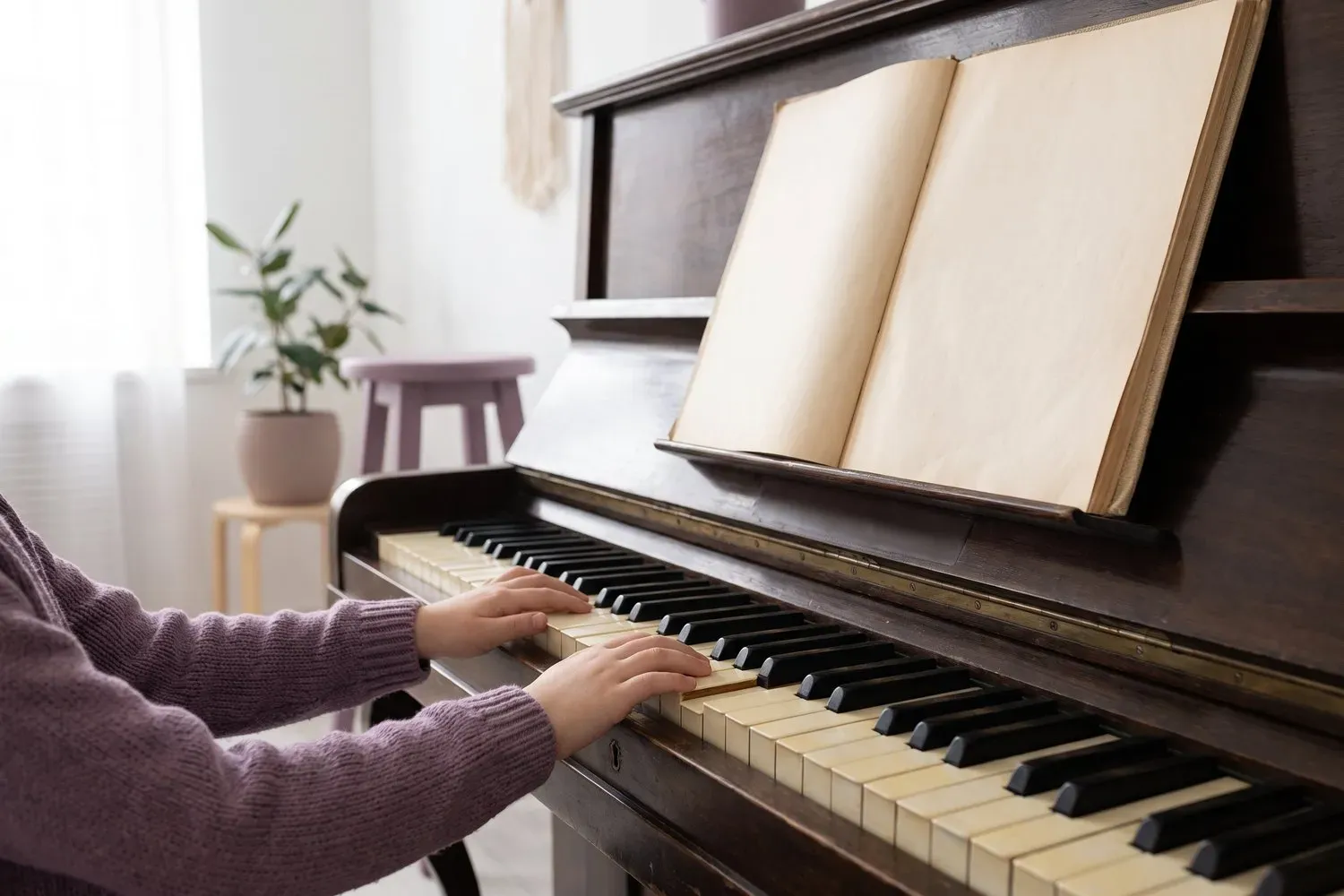
You will likely sit at the piano and find middle C, then play a simple pattern with each hand. The teacher may show you how the pedals work and how to sit at the right height. Much of the first lesson is about sound and comfort rather than speed.
If you are an adult beginner, say so. Many adults worry about being judged, but teachers are used to beginners of every age and will set a pace that suits you.
What to bring
You need very little for a first lesson. Wear something comfortable and bring a notebook if you like to write things down. If you already have music books or a keyboard at home, mention them, but do not buy anything before the first lesson.
For children, a parent or carer may need to stay. At our rooms, under-11s need a parent or carer in the waiting room, so plan for that on the first visit.
Getting ready at home
You do not need a grand piano to begin. A keyboard with weighted keys and a sustain pedal is enough for early lessons, and many learners start that way. What matters most is that the instrument is easy to reach, so practice does not depend on moving furniture.
- Find a quiet spot with room to sit upright and space either side.
- Check the stool height so your forearms sit roughly level with the keys.
- Keep a notebook and pencil nearby for notes from the lesson.
- Put the instrument somewhere you pass often, so a few minutes of practice is easy.
- Ask the teacher which book or app, if any, they would like you to use.
The first week of practice
Short and regular is the aim. Ten minutes on four days will do more than a single long session at the weekend. Practise the small thing you were shown, slowly, and stop while it still feels easy. The point of the first week is to build the habit, not to race ahead.
If something feels tight or painful in your hands or wrists, stop and mention it next time. Piano playing should feel relaxed. A teacher can adjust the stool, the distance from the keys or the hand shape.
Questions worth asking
Ask how much practice is expected each week, whether you need your own instrument yet, and how the teacher likes to share notes. It also helps to ask what they would like you to be able to do by the next lesson, so the week has a clear, friendly target.
Above all, expect to make a sound and enjoy it. The first lesson is a starting point, and every pianist began with one note at a time.