GCSE maths rewards steady practice more than last minute cramming. The subject builds: number skills feed algebra, algebra feeds graphs, graphs feed problem solving. A plan that fits round school, homework and everything else is more useful than a perfect plan you abandon after a week.
Start with the specification, not the textbook
Ask your child's teacher which key stage and which tier the class is working towards, then look at the topic list for the GCSE maths specification. You do not need to read it cover to cover. Use it as a checklist and mark each topic as secure, shaky or not yet taught. That honest map tells you where the time should go.
Foundation and Higher share a lot of content, but the style of question differs. If the tier is not settled, build the core skills first: fractions, percentages, ratio, negative numbers, solving equations and reading graphs. These come up whatever tier the student eventually sits.
Build a weekly rhythm
Three short sessions beat one long one. Twenty to thirty minutes after school, twice in the week, plus a longer session at the weekend is enough to make progress without crowding out other subjects. Keep the same slots where you can, so practice becomes a habit rather than a negotiation.
Each session should do one job. A useful pattern is: warm up with five quick questions on a topic already secure, spend most of the time on one shaky topic, then finish with one exam style question. Writing the answer out in full matters. It is where mistakes show up.
Use practice questions properly
Practice questions are not a test to be raced through. Treat them as a way to find out what you do not yet understand. Work without notes first, then use notes to finish, and mark the attempt against the mark scheme. The gap between the two attempts is the learning.
Keep a mistake log. One line is enough: the topic, what went wrong and the fix. Read it before the next session. Over a term, the log becomes a personal revision guide, far more useful than a generic one.
A simple weekly plan
- Monday: ten minutes on times tables, fractions or another core skill.
- Wednesday: one shaky topic from the checklist, with worked examples first.
- Saturday: a mixed set of exam style questions, marked and logged.
- Sunday: review the mistake log and choose next week's shaky topic.
- Once a month: a longer paper under quiet, timed conditions.
Keep the pressure honest
Revision works best when sleep, food and a bit of exercise stay in the week. A tired student reading notes is not learning much. Short, focused sessions with proper breaks are kinder and more effective.
If a topic stays stuck after two or three attempts, ask for help rather than repeating the same explanation. A tutor, a teacher or a patient adult can often show the idea a different way, and that is usually all it takes.
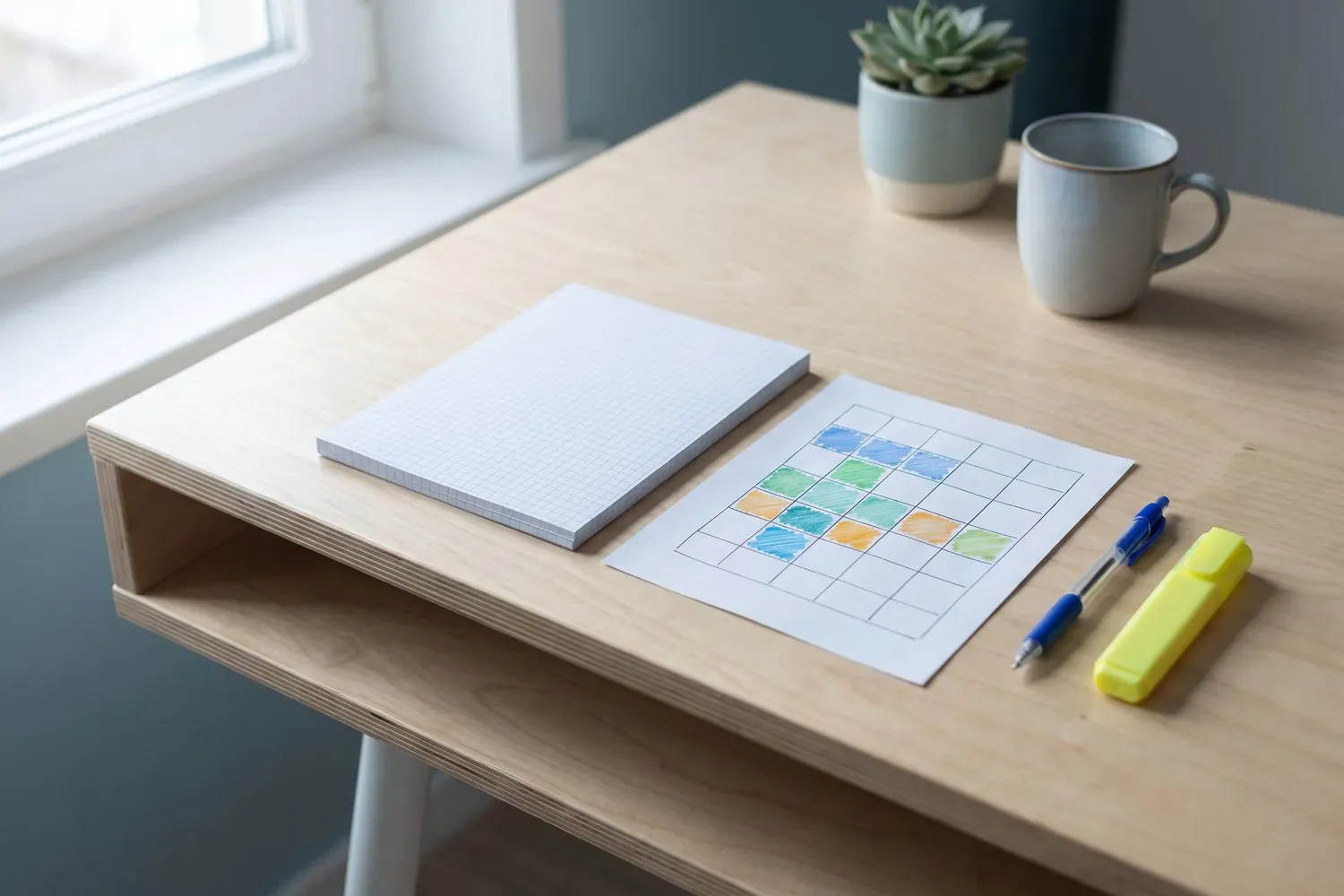
Finally, keep the plan visible. A sheet on the fridge or a note on the phone is a quiet nudge. Tick each session off and adjust the plan when school gets busy. A flexible plan that survives a bad week is the one that works.